I’d heard whispers about Robert Kiyosaki’s Rich Dad Poor Dad for a long time now—another bestseller, probably overhyped, I thought. I figured I already knew the basics it covered, so I kept it on my mental ‘maybe someday’ list. But one afternoon, while strolling through a cosy bookstore, I spotted a pocket-sized edition of the book. On a whim, I picked it up, thinking, ‘If so many swear by this, maybe it’s time to give it a chance.’ And so, I embarked on that journey!
Initial Thoughts: Should I go to School?
I have to say, even though some of Kiyosaki’s ideas weren’t entirely new to me, his way of presenting essential principles of personal finance struck a chord. His storytelling not only deepened my understanding but underscored the need for schools to teach these real-world skills—knowledge that’s vital for navigating life. Unfortunately, most educational systems remain rigid and theoretical. They flat out creativity, overlook the importance of fostering an entrepreneurial mindset, and neglect to provide the kind of practical financial education that is essential for success. The author shines a light on this gap, illustrating how many skilled and educated individuals face financial struggles simply because they never learned how money and personal finance truly work.
Thinking Rich vs. Thinking Poor
This is why I believe it’s vital for parents to pass on key lessons in financial management to their kids. Kiyosaki brings this idea to life by contrasting the mindsets of his ‘Poor Dad’ and ‘Rich Dad.’ His Poor Dad focused on job security, steady salary increases, retirement plans, and government-provided benefits—a traditional approach that values stability. His Rich Dad, on the other hand, instilled in him a belief in financial self-reliance from an early age. He urged young Kiyosaki to invest in his own education and to diversify his interests, aiming to build prosperous ventures and investments. His Rich Dad championed the importance of using one’s brain to secure true independence, challenging the ‘benefactor’ mindset, which he felt fosters dependence and financial vulnerability.
Do you Master your Emotions?
To me, one of the most compelling lessons from ‘Rich Dad’ is the mastery of emotions. He delves into the powerful hold of two emotions that often steer people’s lives: fear and desire. Fear of lacking enough, of missing payments, of losing a job—all of which can lead to clinging to job security or seeking pay raises to satisfy increasing desires. Yet, as income grows, so do expenses, creating a cycle that binds people to a perpetual chase, driven by fear and desire. Instead, if they paused to ask, ‘Is a job a sustainable solution to my situation?’ they would begin to elevate thought over emotion, breaking free from the trap.
Stepping Out of the “Rat Race”
Escaping what the author calls the ‘Rat Race’ is crucial. This term describes the cycle where individuals are bound by reliance on a single income—their paycheck—without pursuing other revenue streams. Instead of investing in new ventures, setting aside funds for reinvestment, or building businesses as those with a ‘wealth mindset’ would, they remain stuck. By shifting focus, they could begin making money work for them, rather than the other way around.
To sum it up, I think Kiyosaki’s work is super eye-opening—especially this book. Honestly, it should be a must-have in every school, giving future generations the money smarts they need to crush it in life. What do you think? Have you read any of Kiyosaki’s books? Find someone who has already read them or is interested in financial topics and discuss main concepts and ideas.
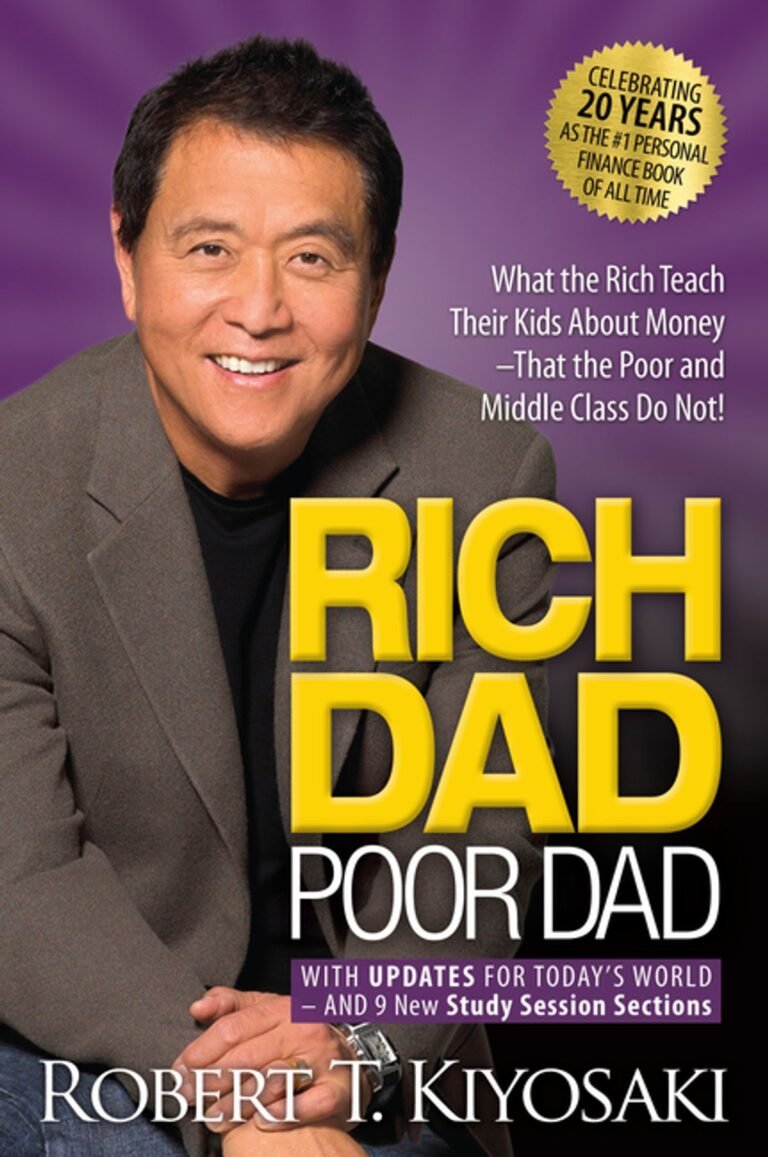
Fancy Reading the Full Work?
DISCLAIMER:
This site uses affiliate links which may earn a commission for purchases at NO additional cost to you. This helps us to continue creating content and support our community. We test each product thoroughly and give high marks only to the ones that are the very best. We are independently owned and the opinions expressed here are our own. Please only buy them if you feel they will help you achieve your goals, otherwise do not send any money.